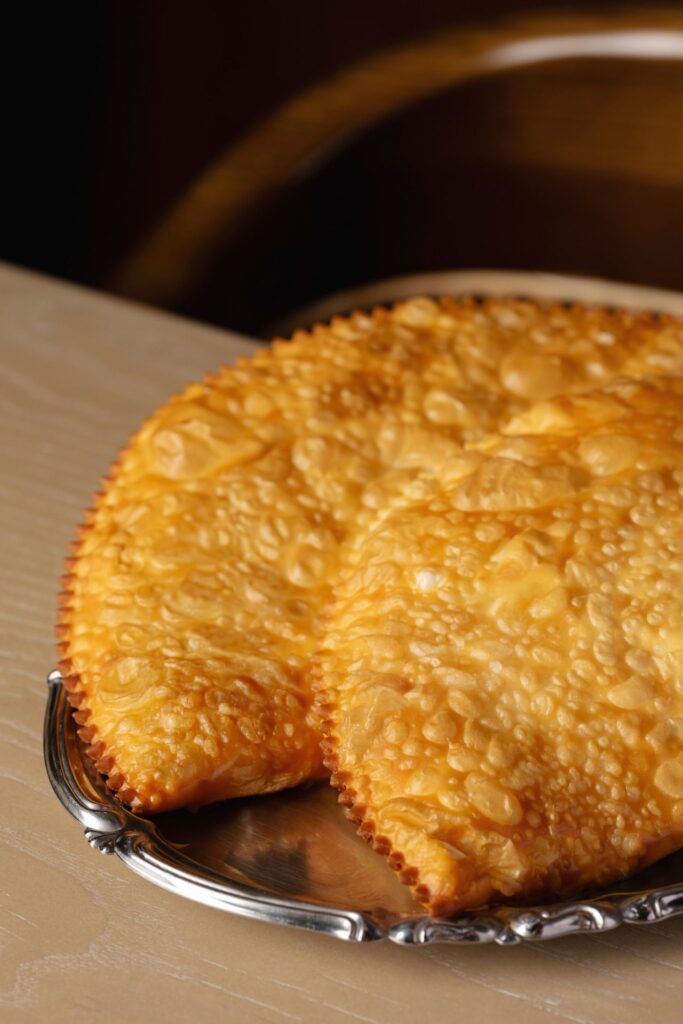
Chebureki is a crescent-shaped fried pie made of thin, elastic dough and a juicy meat filling, cooked quickly in very hot oil. It is not Georgian by origin, yet chebureki in Tbilisi has been part of everyday city life for decades, and for many visitors it becomes one of the most memorable things they eat here. In this article we look at where the dish comes from, how it turned into an urban tradition, what makes a good one and how to eat it the way locals do.
The Origins of Chebureki: From Crimean Tatar Cuisine to the Soviet Era
The story of chebureki begins with the culinary traditions of Turkic-speaking peoples, and the dish as we know it is most often credited to Crimean Tatar cuisine. The name is usually traced to the Crimean Tatar language and explained as “raw pie”. The word “raw” does not describe the dough. It refers to the filling, which goes into the dough uncooked and is cooked only once the pie is sealed and lowered into the oil. For people who needed a hot meal fast, this was a very practical way to save time.
A nomadic way of life meant cooking with as little equipment as possible. Chebureki asked for flour, meat, animal fat and a metal pan, nothing more. Early versions were probably fried in sheep fat, which made them richer and gave them a distinctive aroma. In a harsh climate and on the move, a filling, high-energy food like this mattered. Over time vegetable oil replaced animal fat, but the principle stayed the same: a simple dough of flour and water meets hot fat and turns into a strong, crisp shell that keeps everything inside. Cooks understood how their ingredients behaved long before anyone explained it in the language of chemistry.
In the twentieth century chebureki moved from a regional, ethnic dish to food for millions. Industrialization and the growth of cities across the Soviet Union created a large public catering network that needed dishes which were quick to make, filling and easy to standardize. Chebureki fit perfectly. It could be produced in canteens and in small specialized cafes, and it was during this period that the recipe was unified and exact proportions were written down.
As a result, the dish left its original setting and started a life of its own in cities across many republics. It became an affordable favorite of workers and students. Standardized production simplified the recipe to some degree, but the essence of the dish did not change. Cafes that served almost nothing but chebureki became a familiar part of city streets, and with them came a new habit: people gathering in one place to eat one particular dish, hot and on the spot.

Chebureki in Tbilisi: How a Non-Georgian Dish Became a City Tradition
Chebureki took root in Tbilisi around the middle of the twentieth century, although nobody can name an exact date. Its spread is closely tied to the expansion of Soviet-era public catering, when cafes built around this one dish appeared in the city. Tbilisi has always been open to outside influences, and food was no exception. Despite its foreign origin, chebureki quickly found its place in the rhythm of the capital. Nobody thought of it as festive or refined. It was simply a practical, affordable part of daily life, and the layout of the city’s neighborhoods suited small local spots where a passerby could get something hot and filling in minutes.
The dish changed a little in its new home. “Georgian chebureki” is not a recognized category of its own, but local taste left a clear mark. Tbilisi cooks adjusted the spices and fresh herbs in the filling, and many used mixed minced meat, typically beef with pork. That combination is unusual in the Crimean tradition and entirely natural in Georgian cooking. The structure of the dish stayed as it was, while the flavor moved a step closer to what the city already loved.
The bigger change was social. Tbilisi’s chebureki cafes became meeting places where people dropped in during a work break or in the evening. A small city ritual grew around waiting for a pie straight from the fryer and eating it right there. Over the years the habit went so deep that chebureki stopped feeling imported and became part of Tbilisi’s unofficial food map. The city looks very different today, but for older generations those cafes still stand for a particular time and a particular way of being together.
What Makes the Ideal Chebureki
A good chebureki is a matter of balance between very high heat outside and liquid kept inside. Unlike khinkali dough, which is boiled and stays evenly moist, chebureki dough dries out almost instantly in hot oil. The outer layer loses its moisture and turns crisp and blistered, while the inner layer stays soft.
The main challenge is the pressure that builds inside. The liquid in the filling turns to steam, so the dough has to be thin and elastic enough to hold it without tearing. The filling needs the right proportion of fat and liquid to release enough juice as it cooks. In effect, the meat cooks in its own broth, which is why it never dries out.
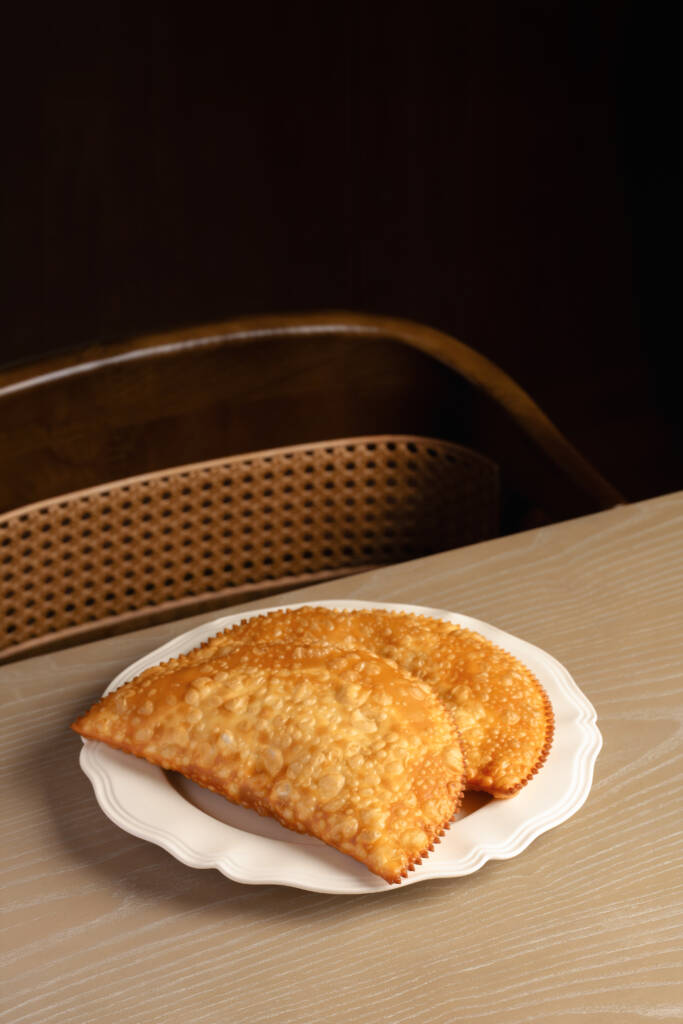
Sealing and frying decide the rest. The crescent shape spreads the stress evenly along the edge. If the edge is not sealed properly, the juice leaks out and oil gets in, and the pie is ruined. The oil must be hot enough to brown the dough at once, yet controlled enough for the filling to cook through before the crust burns. That short burst of heat gives chebureki its golden color and its characteristic crunch.
How to Eat Chebureki: Ritual, Fillings and Drinks
Chebureki looks simple, but there is a right way to eat it, and it follows from how the pie is built. Leave the knife and fork alone. Cutting the dough breaks the seal, the hot juice runs onto the plate and the best part of the dish is gone. Chebureki is eaten by hand. Take the first bite carefully from the top edge, because the steam trapped inside escapes quickly, then wait a moment for it to pass. That short pause is part of the ritual.
Hold the chebureki upright as you eat. Gravity collects the juice at the bottom, so every bite on the way down is richer than the one before. Tilt it flat and the juice spills. This liquid is not just fat. It is a concentrated broth of meat juices and onion, and losing it means losing most of the flavor. It takes a little practice, and after the second or third chebureki it comes naturally.
The original recipe was all about meat, but city menus gradually widened. Vegetarian chebureki is now easy to find, most often with cheese, potato or mushroom. Each filling behaves differently in the fryer. With cheese, the cook has to match the moment it melts to the moment the dough is done. Mushrooms release a lot of water, so the moisture must be kept in check or the dough goes soft. Potato is drier and needs something extra to keep the inside tender. The shape and the method stay exactly the same.
Chebureki has always been social food. The habit dates from the city’s industrial years, when canteens offered fast, filling portions and people of very different professions ended up at the same table. It is not a long, slow meal. A pie that hot sets its own pace.
Drinks are part of the tradition too. Cold beer is the classic choice, since its bitterness and bubbles cut through the richness of fried dough. Hot tea is the other long-standing pairing, and many people like a tangy yogurt drink such as ayran, which refreshes the palate between bites. None of this is a strict rule, but these are the combinations you will see most often on a Tbilisi table.

Chebureki at Vakhtanguri
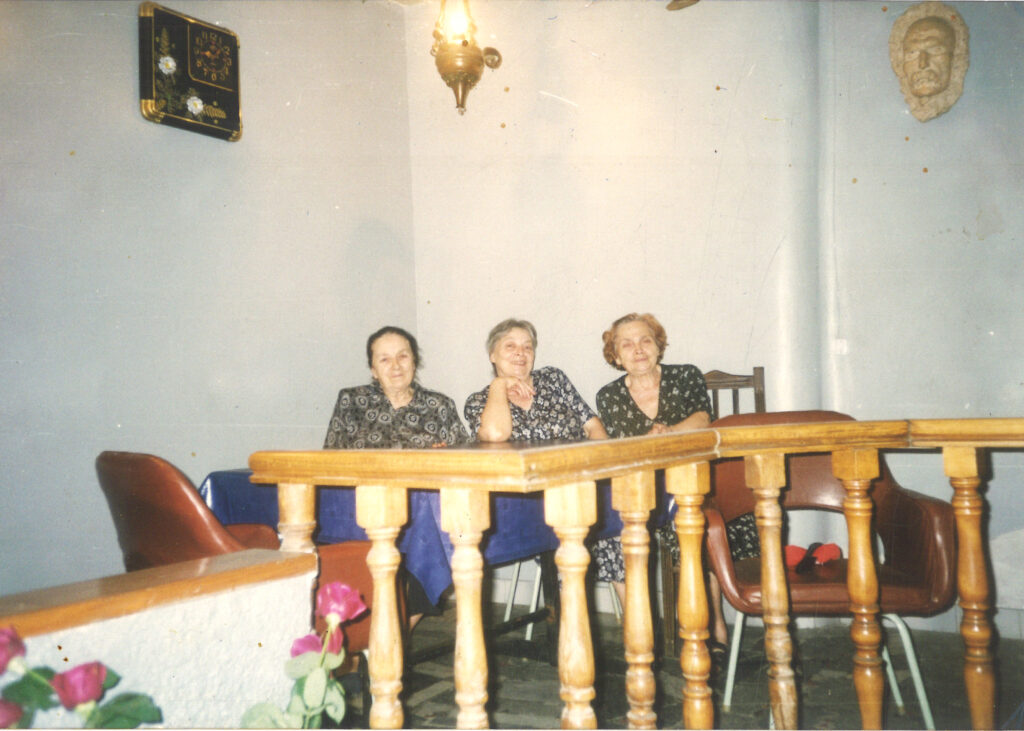
At Vakhtanguri, chebureki is made by a method we have followed carefully for decades. The restaurant opened in Tbilisi’s Avlabari district and has been working without interruption since 1993 at 4 Lagodekhi Street. In all that time the idea behind the dish has not changed. We still use the family recipe we started with, and years of practice have taught us the exact ratio of flour to liquid that the dough needs.
The dough is the hardest part of the work. It has to be rolled thin enough to crisp and turn golden the moment it touches the oil, and it has to stay elastic enough to hold the filling without tearing. Our cooks give real time to kneading and resting it, because properly developed gluten is what produces the crisp, blistered surface. Today chebureki in Tbilisi is made in many places. What matters to us is keeping the traditional texture, with every edge sealed tight before the pie goes into the oil.
Our menu offers six fillings. Alongside the classic meat version you will find other options, including cheese, potato and mushroom. Each one needs its own seasoning and its own level of moisture so that the inside is just right when the frying is finished. The method is the same for all six, all year round.
Chebureki is also available to take away. Fried pastry does not travel well by nature, because steam trapped in a closed box softens the crust. We use packaging that lets air circulate and keeps the pie as crisp as possible, so it still tastes right when you eat it outside the restaurant.
Frequently Asked Questions About Chebureki
What is chebureki?
Chebureki is a crescent-shaped pie of thin, unleavened dough with a juicy filling, deep-fried quickly in hot oil. The edges are sealed so that the juice stays inside while it cooks. You can recognize it by its golden surface covered in small blisters.
Where does chebureki come from?
Chebureki comes from the culinary tradition of the Crimean Tatars. It began as a dish suited to nomadic life, made quickly from very few ingredients. In the twentieth century it spread across the Soviet Union and became a staple of city canteens and cafes.
Is chebureki a Georgian dish?
No, chebureki is not Georgian by origin. It has, however, held an important place in Tbilisi’s food culture for decades, and local cooks adapted the filling to Georgian taste. Today it is seen as a natural part of the city’s everyday cuisine.
How do you eat chebureki?
By hand, never with a knife and fork, so the dough is not pierced and the juice is not lost. Hold it upright and bite carefully from the top edge. Be careful with the first bite, because hot steam escapes from the filling.
Is there vegetarian chebureki in Tbilisi?
Yes. Many places in Tbilisi serve chebureki with cheese, potato or mushroom. These versions keep the traditional shape and frying method and suit anyone who does not eat meat.
Where can I try chebureki in Tbilisi?
Vakhtanguri has been making chebureki from a family recipe since 1993. You will find us at 4 Lagodekhi Street in the Avlabari district, with six fillings on the menu and take-away available.
Vakhtanguri continues a family tradition and serves dishes made the same way for years. If you are in Tbilisi and want to taste chebureki as the city has known it for generations, we will be glad to welcome you at 4 Lagodekhi Street, Avlabari.