

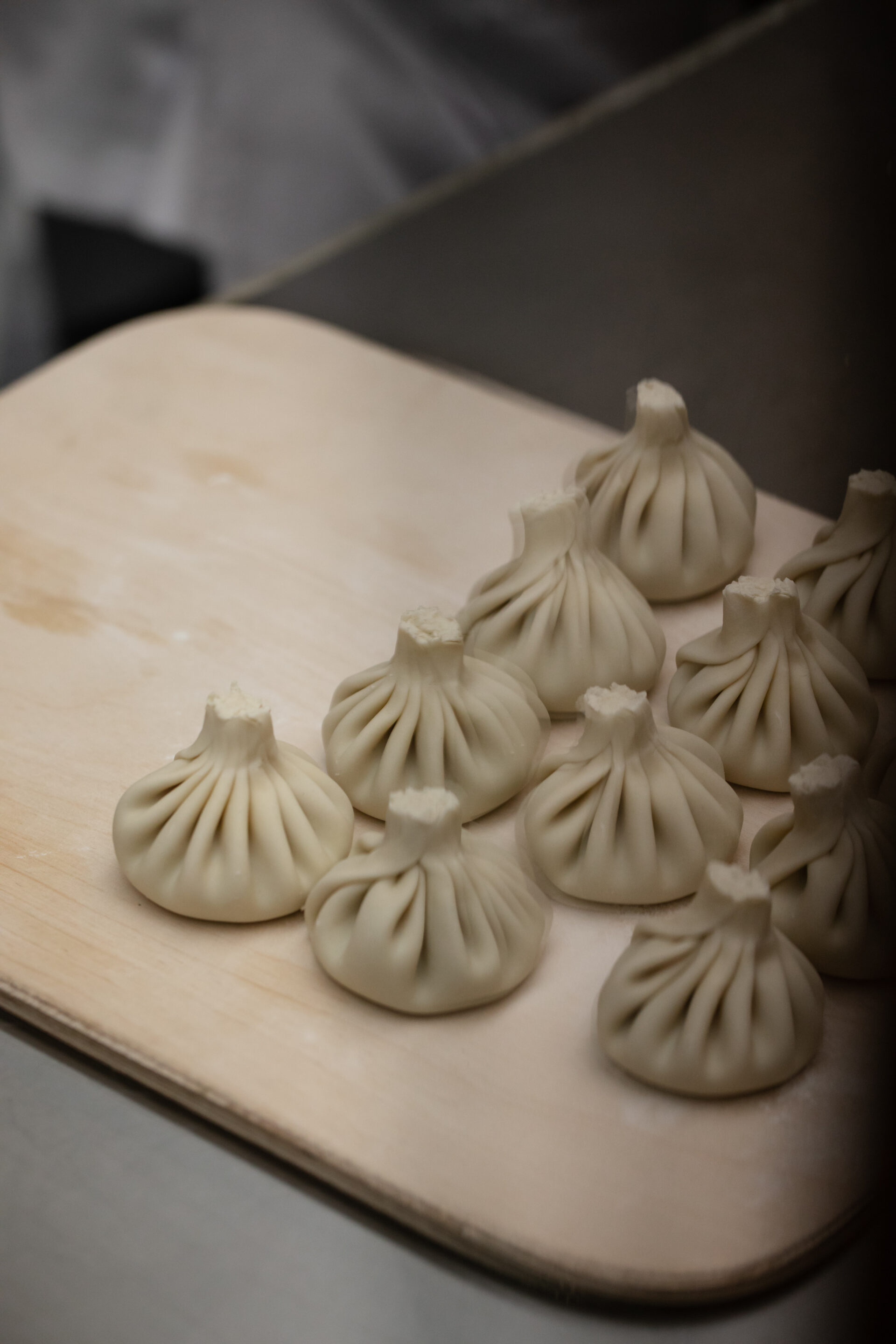
Khinkali represents the perfect specimen of Georgian cuisine where the structural engineering of the dish and its flavor profiles harmoniously complement one another. Its defining characteristic lies in the preparation technique, within which every minor nuance serves a practical purpose, ranging from the precise thickness of the dough meant to contain the broth to the intricate pleats that determine its physical durability. This is a culinarily flawless product that requires no additional accessories or sauces.
The primary element distinguishing khinkali from similar international dishes such as pelmeni, ravioli, or dumplings is the dual nature of its filling, which is a synthesis of minced meat and broth sealed within a dough casing during thermal processing. This outer casing functions as a reservoir designed to withstand internal pressure and high temperatures without breaking the hermetic seal. Here we observe the first sign of true culinary mastery, namely the delicate balance between elasticity and structural strength.
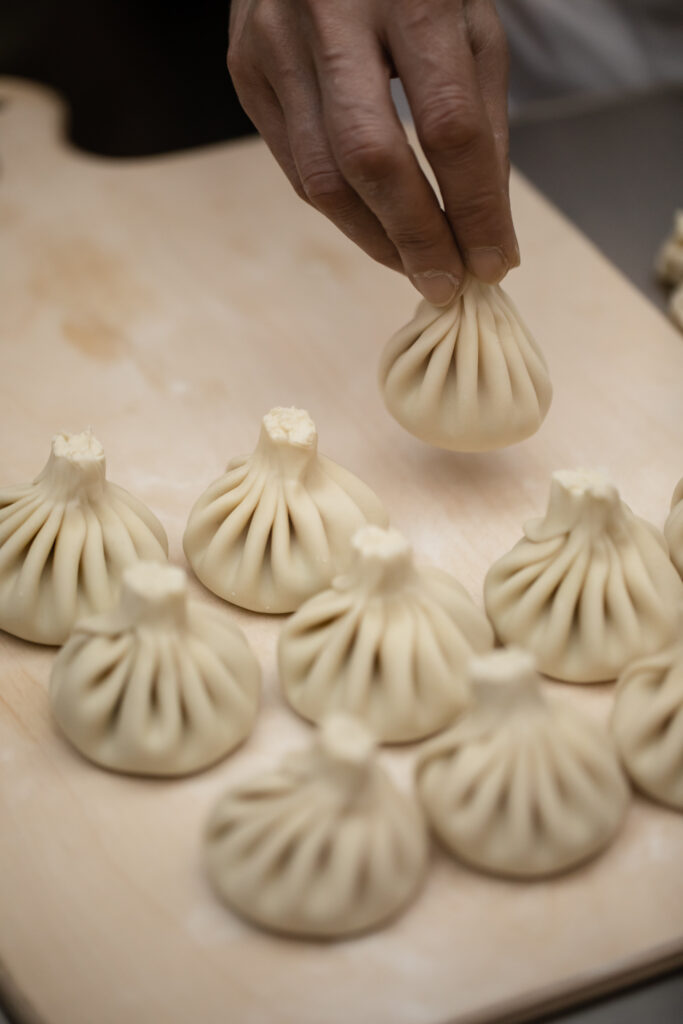
From a visual standpoint, khinkali is a masterpiece of geometric precision. Its pleats are not merely decorative features; they form a rigid structure that distributes the weight of the dish and preserves its shape upon serving. When discussing the number of folds, it would be reductive to focus solely on aesthetics, as this specific detail carries profound symbolic and nearly sacred meaning within the culture of the Georgian highlands.
According to folk legends, the ideal number of pleats on a khinkali was nineteen. This specific figure was far from accidental, as it associated directly with solar symbolism and specifically with the Borjghali, which represents eternal movement and life force in Georgian mythology. The gathered folds at the apex of the khinkali were viewed as analogues to the rays of the sun, while the round shape of the dish itself personified the celestial body. Consequently, the wrapping of khinkali was perceived as a ritualistic act where the chef gathered the solar rays into a singular point.
Beyond the solar cult, the number of pleats served as a direct metric for the social status and technical mastery of the cook. An unwritten law dictated that a higher number of folds reflected a more respectable family, reflecting specifically on the skills of the matriarch. In certain valleys, artisans achieved up to twenty-eight pleats, which corresponded to the days of the lunar cycle and imbued the dish with cosmogonic significance. A high density of folds also represented a practical trial, as tightly and repeatedly folded dough proved significantly more durable, guaranteeing that the khinkali would not fall apart when dropped into the boiling pot. Thus, the pleating of khinkali is not mere decoration but rather a coded history reminding us that even the simplest forms in Georgian cuisine are often rooted in ancient cosmological worldviews. The geometry of the pleats acts as a bridge between culinary technique and the symbolism that transformed this dish into a true gastronomic phenomenon.
The phenomenon of khinkali is further manifested in its social function. This is a dish that demands absolute attention and a specific manner of consumption. Eating it is a ritual in itself, where the rejection of cutlery is not simply a matter of tradition but a practical necessity to preserve the structural integrity of the food. Ultimately, khinkali stands as a gastronomic symbol demonstrating how basic ingredients like flour, water, and meat can be transformed into a complex, multi-layered product.
Origin: From Highland Laws to Urban Traditions
The history of khinkali is not a simple culinary chronicle but rather a journey from survival under harsh conditions to becoming the most critical gastronomic masterpiece of the nation. When discussing its origins, one must look past modern comforts and visualize historical Pshav-Khevsureti and Mtiuleti. In regions where the climate and topography offered humans very few choices, a dish emerged that could deliver maximum energy through minimal components. The primordial form of khinkali perfectly answered the rhythm of highland life by being nutritious, practical, and capable of retaining heat for an extended duration.
Historically, the highland khinkali, which is referred to today as Khevsuruli, represents a model of radical simplicity. Its filling consisted exclusively of hand-chopped mutton. This was not merely a technical detail, as chopping the meat with daggers yields a texture fundamentally distinct from modern minced meat. Hand-chopping leaves the muscle fibers uncrushed, meaning that the natural juices remain locked inside the dough casing during boiling. The only seasonings utilized were salt, black pepper, and mountain thyme. The inclusion of thyme was intentional, as it balanced the specific, heavy aroma of the meat and rendered the dish complete.
A genuine culinary revolution transpired when khinkali descended into the lowlands and integrated into urban life. Tbilisi effectively reinvented the dish. The urban adaptation introduced garlic and herbs, specifically coriander. The appearance of herbs in khinkali established a boundary that divided the culinary world into two factions. One faction maintained that herbs masked the authentic flavor of the meat, yet the new version secured widespread recognition due to its piquancy and lightness. This process gave birth to the Kalakuri variety, linking highland austerity with the lighter aromas of the lowlands.
Evolution altered not only the ingredients but the technology as well. The introduction of the meat grinder accelerated the preparation process, although many connoisseurs still maintain that ground meat loses the distinct character inherent to hand-chopped alternatives. The typology of the meat underwent a shift too, as pure mutton was gradually replaced by a blend of beef and pork. This adjustment rendered the khinkali juicier and softer, making it highly appealing to the general public.
Interestingly, khinkali has never functioned solely as sustenance. In the mountains, its preparation was a collective ritual where labor was shared, and each pleat testified to the skills of the cook. In urban centers, it evolved into a primary catalyst for socialization. Although numerous variations of khinkali exist today, its foundation remains anchored in historical memory, marking a path from cold alpine villages to the modern dining table where the core principles of unparalleled taste and distinctive dining ritual remain unchanged.
The Ideal Khinkali
The perfection of khinkali rests upon its engineering precision. It is built upon three fundamental pillars: the dough, the filling, and the broth. The harmonious coexistence of these elements relies entirely on the complex geometry of the pleats, which remains the ultimate measure of a chef’s professionalism.
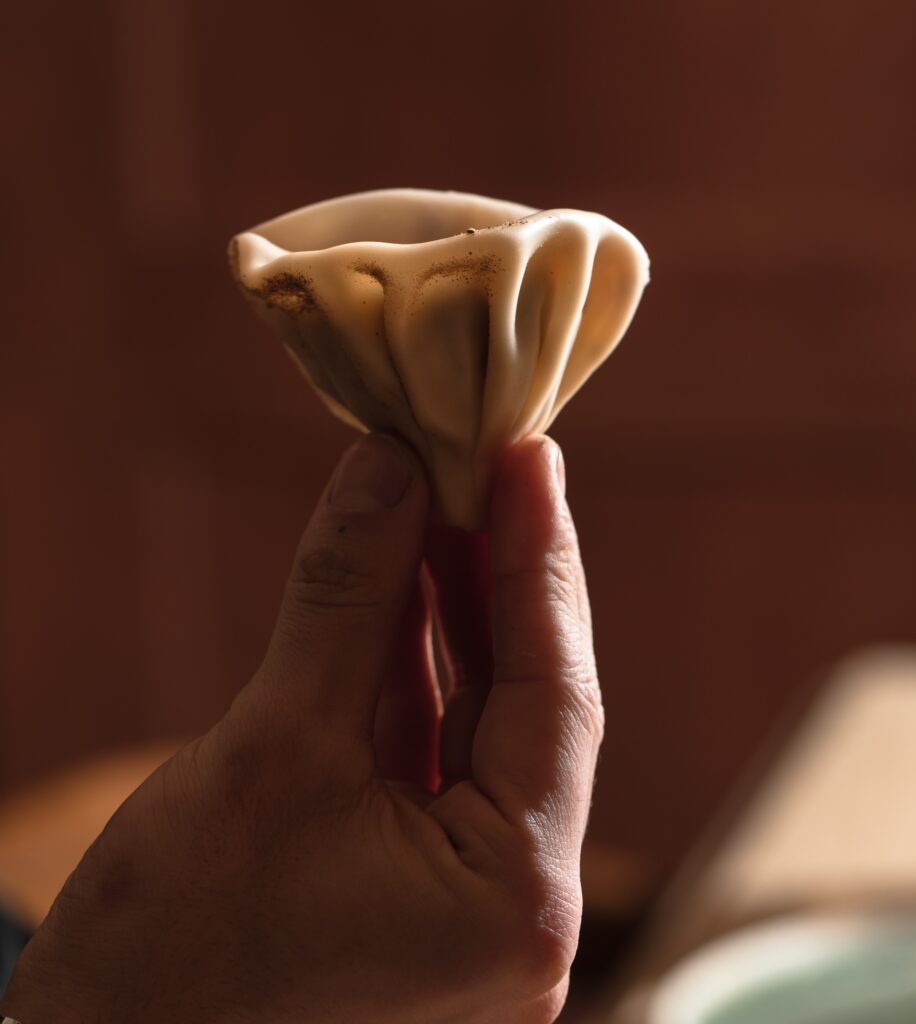
Everything initiates with the dough. This is the reservoir that must withstand internal pressure, high temperature, and gravity without compromising its airtight seal. The ideal dough must be elastic yet dense. Preparing it is a physically demanding process because the dough must be rolled as stiffly as possible. Only such a structure ensures that the khinkali will not tear during boiling and lose the accumulated broth within. This is where the architectural dimension of khinkali becomes apparent, featuring a thin, nearly translucent layer that maintains astonishing durability.
The subsequent stage involves the filling and the legendary broth, which is widely termed the soul of the khinkali. Preparing the filling is an art of balance. The meat, whether hand-chopped or ground, must possess a moderate fat content so that it releases a sufficient volume of broth during the boiling process. The ratio of water to meat is critical here. Water is the secret ingredient that detaches the meat from the dough internally, leaving ample space for the hot, aromatic broth. In an expertly crafted khinkali, the juice must be abundant enough that the consumer experiences the full character of the dish upon the very first bite.
The concluding nuance is the pleating, which serves as both the visual and structural finale of the khinkali. Folk traditions frequently debate the exact number of folds required. It is often said that an authentic khinkali should feature nineteen, twenty-four, or twenty-eight pleats. However, the underlying technique matters far more than the numbers. Each pleat acts as a solid wall that distributes the weight of the dish. The more numerous and delicate the folds, the more experienced the hand of the chef. This process resembles a form of culinary geometry, involving the gathering of the dough edges at uniform intervals and uniting them at a single point called the kuchi, or the crown. The crown itself serves as the foundation of the architecture, acting as the core where all pleats converge to bind the structure. These pleats ensure that the khinkali retains its shape on the plate and does not deflate. Ultimately, the anatomy of khinkali demonstrates how basic ingredients can create a complex structure where flavor, beauty, and engineering precision are completely inseparable.
Ritual and Diversity
According to the unwritten laws of the Georgian table, touching this dish with metal utensils is strictly forbidden, a rule that is less about respecting tradition and more about pure practical necessity. Piercing the dough with a fork results in spilled broth, which equates to an insult to the very essence of khinkali. The ritual demands holding the dish by hand, maneuvering it via the crown, and skillfully consuming the broth during the initial bite. A special role in this process is assigned to the kuchi, the dense crown of the khinkali that is left uneaten. Historically in the mountains, a host could determine how satisfying the feast was and identify the most formidable reveler by counting the number of crowns left on the plates. A playful tradition also existed among youth where a competition was held, and the loser who left the fewest crowns behind was obligated to cover the costs of the next khinkali feast. As for black pepper, it remains the sole legitimate additive to khinkali, providing the final accord to the flavor profile while assisting the digestive system in processing heavy food.
The diversity of khinkali directly mirrors the geographical contrasts of Georgia. The classic Khevsuruli khinkali remains a symbol of austerity, utilizing exclusively meat, water, and salt. In contrast, the urban Kalakuri variant was developed, where the addition of garlic and fresh coriander introduced a completely different dynamic to the dish. Nonetheless, evolution did not terminate there. Various regions of Georgia imparted their own character onto the food. For instance, Mtiuluri khinkali is frequently distinguished by a specific blend of meats and exceptional juiciness. There are also more specialized varieties such as cheese khinkali, filled with traditional Mtiulian cheese that often carries an aroma akin to dambalkhacho, which originated during fasting periods or seasonal migrations to summer mountain pastures. Variations featuring potato or mushroom fillings can also be found, reflecting the historical influences of monastic life and Lenten culinary traditions.
An intriguing history connects the pairing of khinkali with beverages. Although Georgia is preeminently a wine country, accompanying khinkali with wine is a rarity. Traditionally, khinkali is paired with cold beer or vodka, particularly chacha. Beer neutralizes the heaviness of the dish, while vodka serves as the optimal antidote to the fatty meat. This combination further highlights the universal and highly social nature of khinkali. It is a dish that aligns perfectly with friendly, boisterous gatherings and an atmosphere of freedom.
The Khinkali of Vakhtanguri
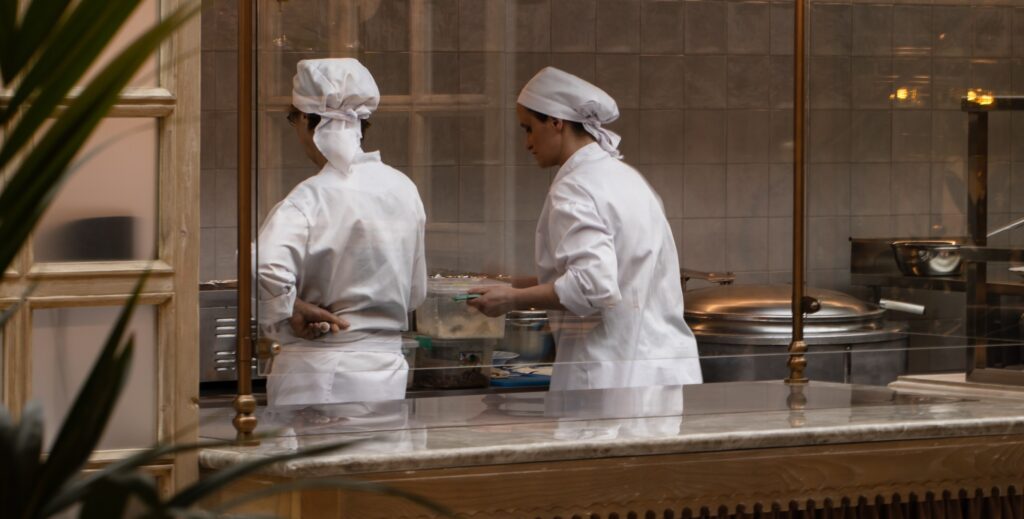
While discussing what constitutes the ideal khinkali is undoubtedly interesting, the true reality can only be experienced through tasting. At Vakhtanguri, we approach this matter with simplicity by refusing any compromises on quality. Our khinkali is exactly as described above, featuring thin, elastic dough, perfectly preserved symmetry in its pleating, and a juicy, traditionally seasoned filling where every single drop of broth retains an extraordinary aroma.
Visit us at Vakhtanguri to experience the true taste for yourself :
Facebook: https://www.facebook.com/share/15ok73TSHn/
Instagram: https://www.instagram.com/vakhtanguri_s_chebureki?igsh=MXR4MXJ4OG9wbzY1Mg==
Website: https://vakhtanguri.com/