

The Georgian Supra: A Social Institution and the Continuity of Values
In Georgian cultural paradigm, the Supra (traditional feast) has never been viewed merely as a collective act of dining. In its essence, it represents a complex social institution where the sharing of values, ethical norms, and collective memory occurs between generations. Historically, it was around the Supra that the social fabric was woven – a fabric that, alongside language and religion, ensured the preservation of Georgian identity.
In this process, a dish serves not only a material function but a symbolic one as well. It acts as a “repository of memory,” preserving information about a specific region, family, and era. The transmission of knowledge from the older generation to the younger is not conducted through didactic teaching; rather, it is a performative process where tradition comes to life through direct participation and observation. Consequently, the phenomenon of Georgian hospitality is a mechanism of cultural survival, where welcoming a guest and sharing a meal is a ritual of restoring trust on both a personal and societal level.
Tradition is often perceived as a static, immutable given; however, a closer look at gastronomic culture proves otherwise. In reality, a true tradition is a living organism that undergoes evolution and adapts to new realities, while maintaining its fundamental structure – the “core of authenticity.”
The resilience of Georgian cuisine lies precisely in this dynamic equilibrium. Here, a recipe is not a dogma; it more closely resembles a musical composition upon which each new generation adds its own improvisation, while leaving the primary melody untouched. Crucial to this process is the phenomenon of the “Hand” – a synthesis of individual mastery and ancestral experience that stands far above technical precision. This is what makes a Georgian dish a unique phenomenon: despite globalization and rigid culinary frameworks, an authentic recipe retains its individual character because it is based not only on ingredients but on the years of emotional experience associated with their preparation.
The Roots of the Kitchen: A Space of Generational Solidarity
If the Supra is a space for public dialogue, the kitchen represents the internal, backstage sanctuary where the formation and conservation of culinary heritage take place. In the Georgian reality, the kitchen has long been considered the starting point of family hierarchy and, simultaneously, unconditional solidarity. This is where the ritualistic transfer of knowledge occurs – from grandmother to grandchild, from mother to child, in an unbroken chain.
In this space, labor is not merely a mechanical process but a non-verbal form of education. Observing how dough is kneaded, how spices are perfectly balanced, how ingredients are measured simply by eye, or how temperature is controlled intuitively, transmits sacred information to the younger generation – information that is practically impossible to systematize or transfer into textbooks. This is “invisible knowledge,” accessible only to those who participate. It is here that respect for raw materials, time, and the labor invested in the final product is cultivated.
The kitchen becomes a laboratory where generations enrich one another: the older generation preserves the “canon” and the standard of taste, while the younger brings new energy and the ability to adapt to modern technologies. This solidarity creates a firm emotional bond – the hours spent in the kitchen forge a sense of shared responsibility toward the family legacy. It is this continuous connection that ensures culinary culture does not become a static exhibit but remains a living, functional, and most sincere part of daily life.
The Ethics of Hospitality: The Dish as a Form of Communication
The phenomenon of Georgian hospitality transcends simple gestures of goodwill and evolves into an ethical system where the dish serves as the paramount medium of communication. In this context, a table set for a guest is not merely a gastronomic offering; it is a non-verbal message expressing respect, trust, and a readiness for sincere dialogue. The Georgian code of hospitality involves receiving a guest not as a stranger, but as a temporary yet full member of the social space represented by the family or the restaurant.
A dish, through its composition and quality of preparation, becomes the determinant of the emotion the host extends to the guest. It is here that one of the primary characteristics of the Georgian persona – generosity – is revealed, manifesting not in material excess but in the desire to share. This approach dissolves the barriers of alienation and creates the ground for genuine, profound communication. Consequently, the gastronomic experience becomes a bridge connecting people of diverse backgrounds around shared values.
These ethics of hospitality also define the dynamics of the table: every detail, from the sequence of service to the aesthetics of the tableware, serves to create a unified, harmonious environment. The dish becomes the “intermediary” that facilitates the exchange of ideas and allows the guest to feel part of the unbroken tradition our culture has built over centuries. Ultimately, hospitality is not just about sustenance; it is the highest form of establishing human connections, where taste and emotion create an indivisible whole.
“Vakhtanguri”: A Living Continuation of Tradition and Family Legacy
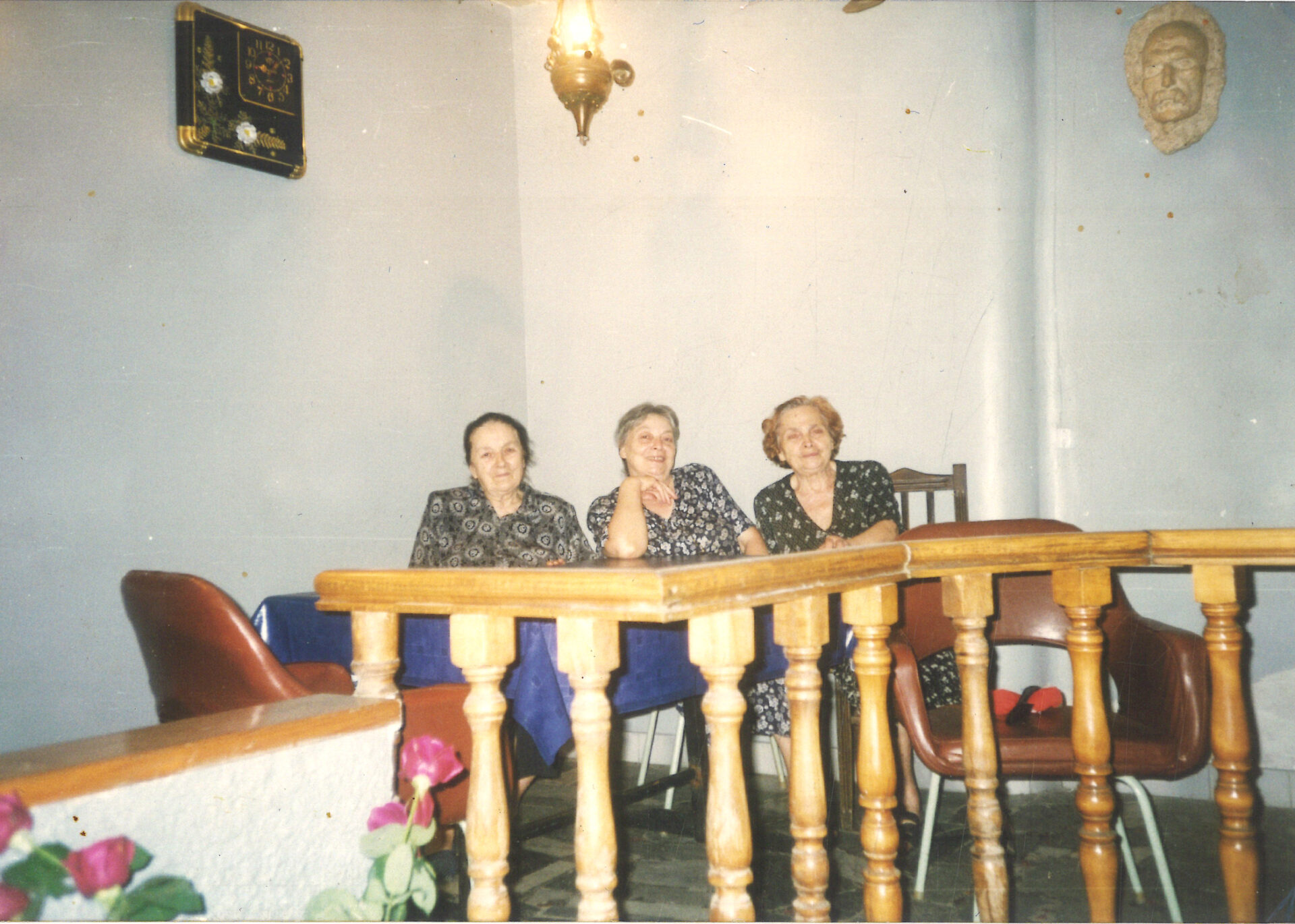
All the theoretical aspects that define the phenomenon of Georgian gastronomy find not only an ideological anchor but a primary value in the history of Vakhtanguri. Since 1993, our restaurant has developed into a space where the preparation of every dish has retained the aura of family daily life.
The central pillar of our restaurant is the very recipes we received through the sacred exchange of knowledge between generations – recipes that have been preserved with extraordinary care over the years. With us, a recipe is not perceived merely as a preparation instruction; it is a living heritage that preserves the culture of selecting each ingredient and the ritual of preparation passed down from generation to generation.
A vivid example of this family legacy is the “Gakiluli” Lobiani (peeled bean bread), the introduction of which is attributed to Eleonora Mkheidze in the restaurant’s early stages. This dish represents a direct reproduction of an ancient Rachan culinary tradition, which the author preserved from her own ancestors through an unbroken chain of knowledge. The uniqueness and cult status of “Gakiluli” Lobiani lie in its specific, labor-intensive technology, which involves the complete removal of the skin from each bean. This method grants the dish not only a distinct texture but a completeness of flavor that sharply distinguishes it from widely available counterparts. Although this recipe remains little known to the broader culinary community, it remains an immutable part of the Vakhtanguri menu – a symbol of the restaurant’s dedication to protecting and reviving the sacred knowledge kept within family circles.
The new, academic order of the interior and its modern elements are merely a frame for the primary essence born in the kitchen. Despite the visual transformation, the same atmosphere still reigns within the walls of Vakhtanguri, making the guest feel, from the very first step, that they are part of this great family history. For us, hospitality is a responsibility to the past and a promise to the future – that the traditional, familial flavors of Georgia will always remain unchanged with us.
We invite you to visit Vakhtanguri to experience Georgian cuisine crafted through the sacred transmission of generational knowledge :
Facebook: https://www.facebook.com/share/15ok73TSHn/
Instagram: https://www.instagram.com/vakhtanguri_s_chebureki?igsh=MXR4MXJ4OG9wbzY1Mg==
Website: https://vakhtanguri.com/