

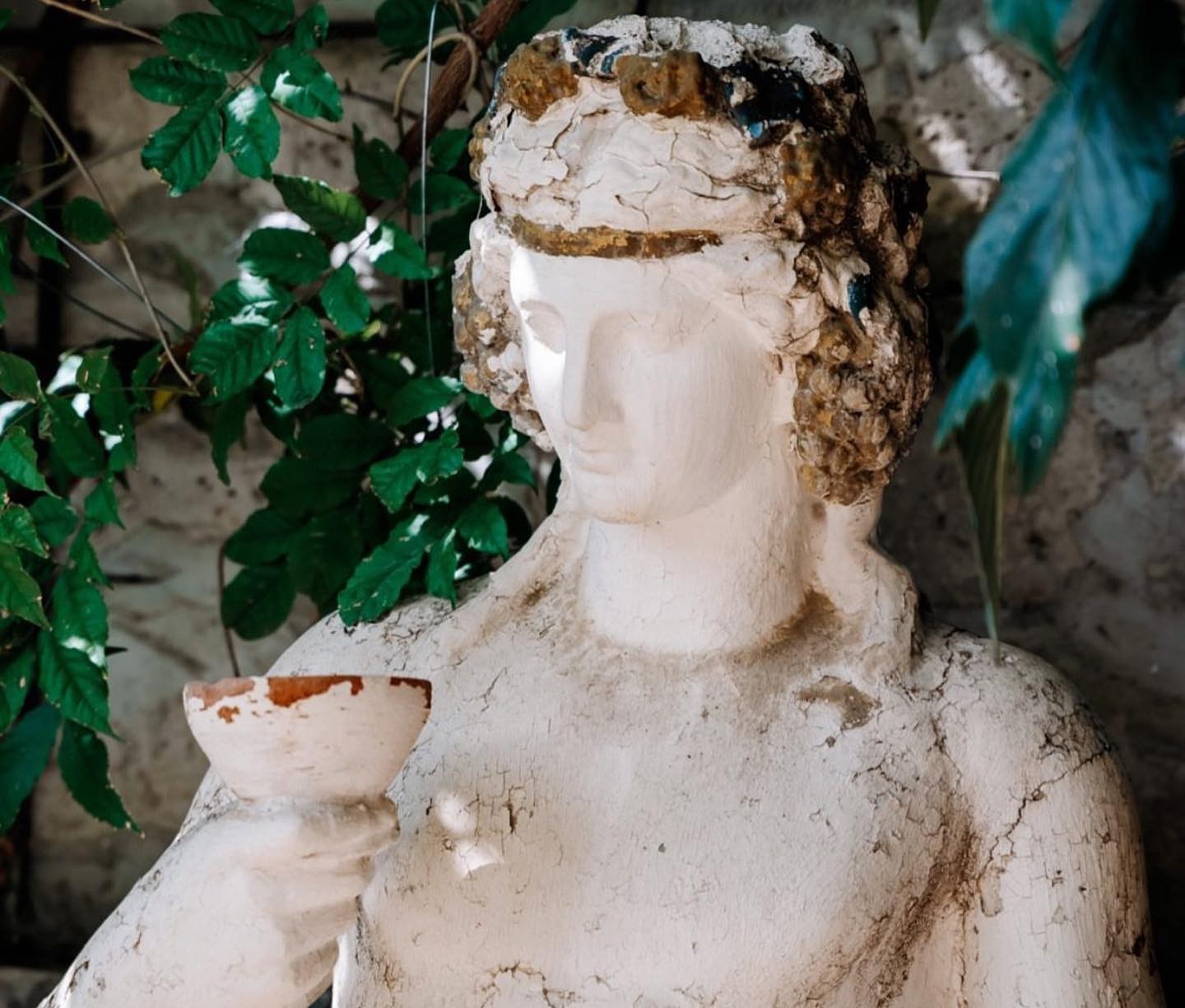
In the Greek pantheon, few figures are as multifaceted and shrouded in mystery as Dionysus. He is the only god to ascend Mount Olympus born of a mortal woman, Semele, rendering him a unique bridge between the earthly and the divine. Dionysus is far more than the god of wine; he is a symbol of enthusiasm, the renewal of life, and those spontaneous celebrations that transform the mundane into the sacred.
According to mythology, Dionysus is the “Stranger God”-an eternal wanderer who always returns. Known as the “Twice-Born,” he embodies the god who dies and is reborn, representing the eternal cycles of nature, a phoenix-like resurrection, and an energy that time cannot diminish. His cult has always been synonymous with freedom, the dissolution of barriers, and an uncompromising authenticity – a state in which one finds their truest self.
It was precisely this cyclicality and capacity for transformation that, in 1993, became the foundation for the visual identity and spiritual philosophy of restaurant Vakhtanguri. In the Tbilisi of that era – a city facing profound social and existential challenges – artist Tengiz Kikalishvili (Kikala) erected a statue of Dionysus at the heart of the restaurant. This was not merely a decorative choice; it was a manifesto. As a true creator, Kikala sensed that on this historic soil of Avlabari, it was Dionysian energy, the thirst for life, and the archaic tradition of hospitality that had to become the central axis.
Upon the statue’s installation, the artist uttered a cryptic phrase: “This statue shall last only ten years.” This was neither skepticism nor a lack of appreciation for his own work. On the contrary, it was a gesture of humble artistic deference to the vastness of time. Kikala believed that while form may change and materials may age, the spirit embodied by this figure would live far longer than a mere decade.
Today, 33 years later, Dionysus remains with us. He has survived numerous locations, eras, and social shifts. His existence has long transcended physical durability, evolving into the immutable symbol of Vakhtanguri – a testament to the fact that true values based on sincerity, quality, and human connection endure across decades and centuries. The return of Dionysus to his original point of origin in 2026 marks the completion of one cycle and the beginning of another – a journey that first took root in a small Avlabari courtyard in 1993.
Why Dionysus?
The selection of Dionysus as the restaurant’s symbol was not merely an aesthetic preference. it was a profound conceptual choice that perfectly echoed the essence of Vakhtanguri. For our guests, a visit here has never been limited to gastronomic interest alone. It was, and remains, a social ritual that gains greater stability and meaning with each passing generation.
The following symbolism illustrates the deep connection between ancient mythology and the living history of Vakhtanguri:
Wine Culture and the Chalice: The chalice held in the hand of Dionysus is not just an attribute; it is the cornerstone of the Vakhtanguri philosophy. In the Georgian consciousness, wine is far more than a simple beverage. It is a vessel of cultural memory and a social mediator. Dionysus, as the patron of this mediation, embodies the truth that is born only through the coexistence of wine and sincere conversation.
The Dissolution of Alienation: Wine dissolves barriers and opens the way for genuine communication. At Vakhtanguri, this tradition takes on a special hue – here, the wine chalice becomes a bridge between past and present. When a guest tastes wine with us, they join a multi-decade chain that, since 1993, has united artists, politicians, scholars, friends, and families. The Dionysian chalice symbolically consecrates this bond, reminding us that the Georgian phenomenon of hospitality is built upon the art of sharing.
Democratic Spirit and Tolerance: The mythological nature of Dionysus inherently implies democracy and tolerance. He was the god who descended from the high peaks of Olympus to celebrate life among the people. He dismantled artificial barriers, social strata, and statuses between human groups. This very “Dionysian freedom” became Vakhtanguri’s calling card from day one. The restaurant emerged as a unique space where any person, regardless of social status or profession, felt equal and welcomed. Around our tables, one would often find prominent public figures sharing an evening alongside students seated at the neighboring table.
The Code of Sincerity: This is the code of tolerance at our restaurant – here, the guest’s character is paramount, not their title. The statue of Dionysus, greeting visitors at the very entrance, serves as a guarantee that upon entering this space, all external masks and statuses are left at the door. Inside, only the sincerity of human relationships and a true atmosphere of hospitality await.
The Avlabari “Renaissance”
1993 was not an era of pomp, luxury, or tranquility in Tbilisi’s modern history. On the contrary, it was a period of existential survival, bitter winters, and the uncertainty of waiting for electricity. Yet, paradoxically, it is during such times of crisis that the most authentic and viable ideas are born. In the heart of Avlabari, where Vakhtanguri took its first steps, Georgian gastronomy was not perceived as a commercial business industry. It was an organic extension of family warmth, solidarity, and hope.
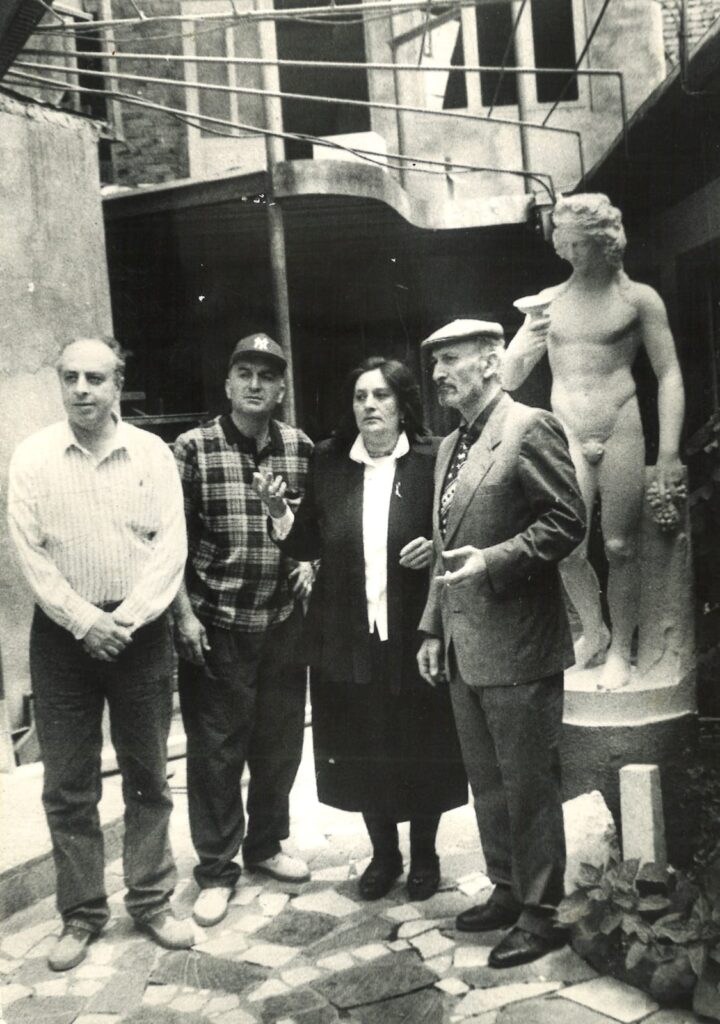
Against this backdrop, Tengiz Kikalishvili’s decision to choose the face of an ancient god as the central figure of the restaurant was a revolutionary and bold step for the reality of that time. Kikala did not seek to artificially idealize the space or create a false sense of luxury. Instead, he created a figure whose emphasized fragility of material and texture conveyed the primary message: everything in this world is temporary; matter fades and changes, and the only thing that withstands time is the emotional trace a guest carries with them upon leaving. Vakhtanguri never became a static symbol of luxury; rather, it became a dynamic place where people gathered happy memories.
The figure of Dionysus in the interior of Vakhtanguri functioned from the start as the “Invisible Host.” This was not just a statue in a corner, but the axis around which the entire aesthetic world of the restaurant revolved. With his unique and recognizable style, Tengiz Kikalishvili created an environment where mosaics, stained glass, and wall paintings were woven into a unified synthetic narrative. His artistic signature – painted booths and large-scale murals was not merely decorative. Each detail represented a separate story, conveying the character, diversity, and humor of Tbilisi. It was a space where art was not distanced from the viewer; on the contrary, the guest became a part of the art itself.
Today, the statue that has preserved its original energy for 33 years is undergoing a vital stage of restoration. However, our goal is not to create a “new,” artificially rejuvenated Dionysus. Such an approach would be disrespectful to the history this figure has traversed alongside the restaurant. Our task is the conservation of those “scars” and traces of time that three decades have left on the body of Dionysus. These scars are the true and unmistakable hallmark of Vakhtanguri’s history. The restoration process aims to return the statue to its original form without losing its character or the experience this symbol carries.
The return of Dionysus to the restaurant’s entrance, where he greets the guest at the very first step, is a promise – Vakhtanguri remains a space where history, art, and the unconditional love of hospitality converge. This is a renaissance not only of a business but of that Tbilisi spirit, of which Kikala left this divine figure as a guardian in 1993.
The Eternal Host – Symbol of Vakhtanguri
The restored statue of Dionysus, which will take its place of honor in the new facility, is far more than just a work of art or an element of interior design. This figure is an unmistakable reminder that our restaurant has never been merely a combination of walls, tables, and a gastronomic menu. In its essence, it represents an integral part of Tbilisi’s collective memory – the invisible fabric that connects the city’s history, its daily life, and individual destinies.
Urban memory is not a static given – it is a living process nourished by encounters, conversations, and the emotional experiences generated by specific spaces. From 1993 to the present, Vakhtanguri has succeeded in becoming exactly such a “repository of memory.” The figure of Dionysus, who has observed the transformation of Tbilisi for three decades, appears today as a symbolic mediator, uniting the energy of those who, many years ago, offered toasts around this statue, and those who, in the future, will step through the restaurant’s doors for the first time.
In 2026, we invite you not simply to dinner, but to continue the story that began 33 years ago in a small Avlabari courtyard. Dionysus awaits you once again with raised chalice – humble, steadfast, and ready for the decades to come.
Facebook : https://www.facebook.com/share/15ok73TSHn/
Instagram : https://www.instagram.com/vakhtanguri_s_chebureki?igsh=MXR4MXJ4OG9wbzY1Mg==
Website : https://vakhtanguri.com/